
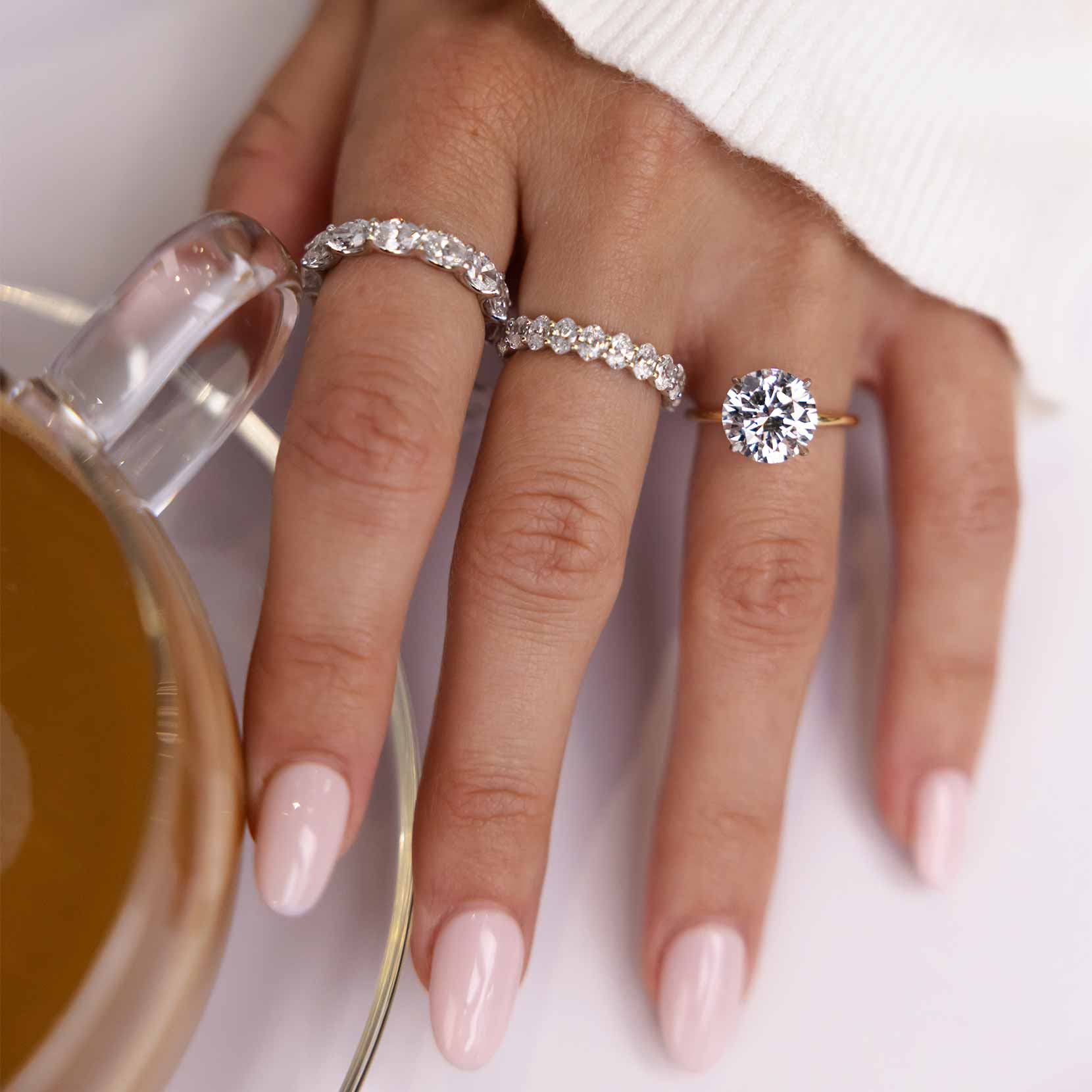
One of the questions we hear a lot is whether it’s okay to mix metals. Can you wear yellow gold with white gold? Can a diamond pendant in white metal live on the same neck as a yellow-gold chain? After 45 years of helping Atlanta clients build collections, our answer is simple. Yes. We never push our clients toward uniformity, and mixing metals across your jewelry wardrobe is something that’s always been part of how people actually wear their pieces.
The question isn’t whether to mix. It’s how to do it in a way that feels intentional. Here’s how we think about it.
Why mixing metals works
When you layer mixed metals, the pieces stand out a little more rather than everything blending together. The collection also reads differently. It looks less like a set and more like something collected over time, with different pieces purchased for different milestones or occasions. There’s something special about that, and it’s part of why we encourage clients to mix rather than match.
A lot of factors can affect how mixed metals work for any individual, including complexion and personal taste in clothing. But for the most part, mixed metals look really good together, and there’s a lot more freedom here than people sometimes assume.
Layering pieces
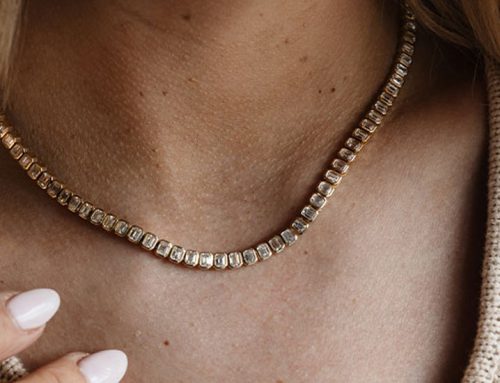
The neck is one of the easiest places to start. If you have a diamond pendant in white metal and a yellow-gold tennis necklace, they can pair really well when layered together. Different metals, different lengths, different weights, and the combination has more interest than either piece worn on its own.
Bracelets are a natural place for mixed metals. A Cartier Love bracelet in yellow gold next to a diamond tennis bracelet in white gold is a winning combination because each bracelet retains its identity on the wrist.
Earrings offer another option, especially if you have multiple piercings. Diamond studs in one hole, with small yellow-gold ear crawlers climbing up, is the kind of contemporary layered look that’s become really popular. It’s also a low-commitment way to start mixing if you’re not ready to layer at the neck or wrist yet.
Mixing metals within a single piece
Mixing metals in a single piece is a slightly different conversation, and we approach it with greater care. The goal is for the metal choice to support the stone, not distract from it. A custom example: a yellow-gold head holding a green emerald with a platinum band can work beautifully, as long as the contrast is delicate. You can see the difference between the two metals, but it isn’t so much of a difference that it becomes bothersome. That’s the line we watch for, and it’s the kind of detail that separates a well-designed mixed-metal piece from one that just looks busy.
The Universal Diamonds experience
We don’t push our clients toward any particular look. When you come in to consider a new piece, we want to know what you already own, what you wear together, and how this piece would live alongside the rest of your collection. The right answer depends on your taste, your existing pieces, and how you actually wear your jewelry. Those are conversations, not formulas.
This is also where seeing pieces in person makes such a difference. We can show you how a yellow-gold piece sits next to a white-gold piece, how different lengths layer, and how the contrast actually reads when it’s on your skin rather than in a photograph. That kind of side-by-side comparison is hard to get any other way.
If you have pieces in different metals you’ve never worn together, or you’re considering a new piece and want to think about how it’ll work with what you already own, come see us. We’d love to walk through what you have, talk about what would complement it, and help you find the combination that feels like yours. Stop by our Buckhead showroom or reach out to schedule a consultation.


Leave A Comment
You must be logged in to post a comment.